
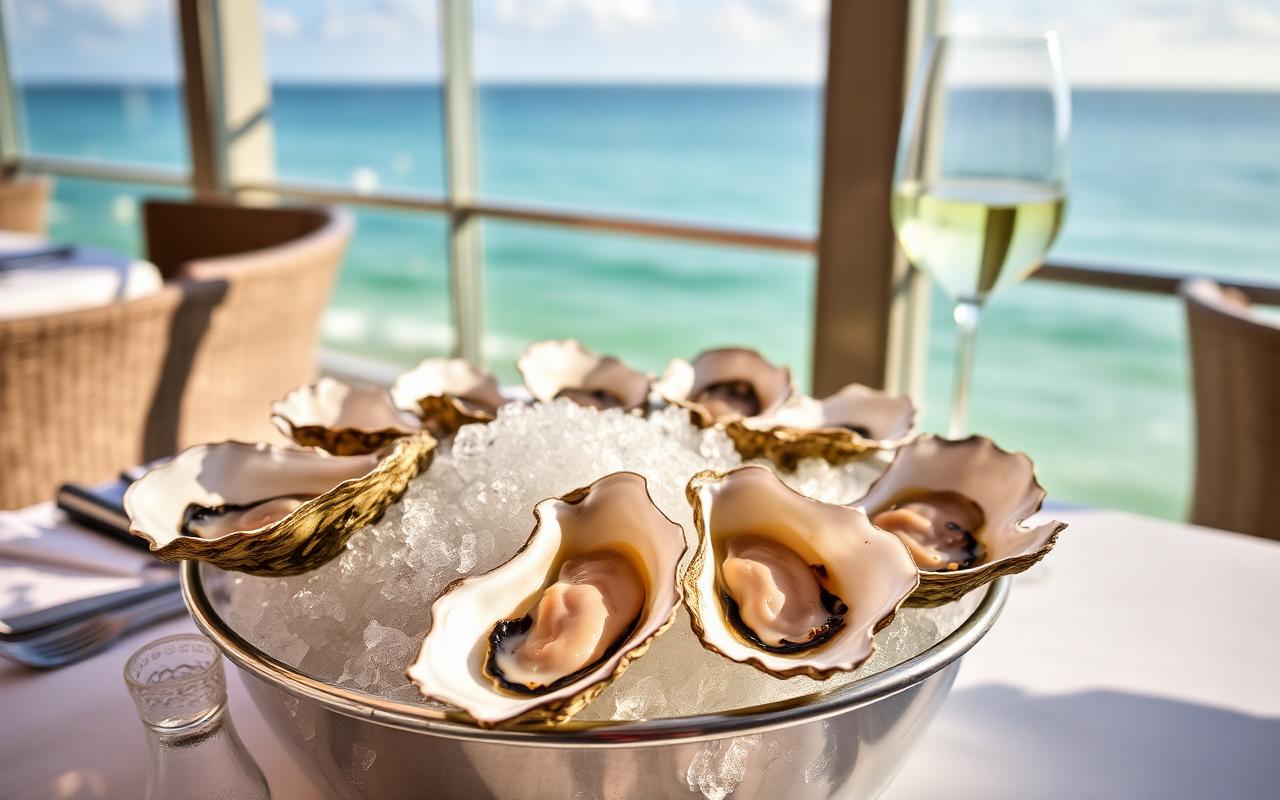
There's a moment in every Gulf Coast evening when the day's heat softens, the light turns amber, and the only thing that feels exactly right is a cold oyster on the half shell, a squeeze of lemon, and a glass of bone-dry Muscadet. The raw bar — that most elemental expression of the Gulf Coast's relationship with the sea — is experiencing a renaissance that elevates it from simple bar snack to culinary art form.
The Oyster Awakening
For years, Gulf Coast raw bars offered a straightforward proposition: Gulf oysters — large, briny, and mild — served on ice with cocktail sauce and crackers. It was good. But it was limited. The transformation began when forward-thinking restaurants started sourcing oysters from multiple regions — East Coast beauties from Maine and Prince Edward Island alongside Gulf varieties — allowing diners to experience the concept of 'merroir,' the oyster equivalent of wine's terroir.
Today, the best Gulf Coast raw bars offer flights that might include a dozen varieties: buttery Wellfleets from Cape Cod, crisp Kumamotos from the Pacific Northwest, briny Malpeques from PEI, and local Apalachicola oysters that taste of the warm, mineral-rich Gulf waters. Each tells the story of its origin — the temperature, salinity, and ecology of the water where it grew — and educated shuckers guide diners through the tasting with the same expertise a sommelier brings to wine.
Beyond the Oyster
The modern Gulf Coast raw bar extends well beyond bivalves. Stone crab claws — served cold with mustard sauce and drawn butter — remain the crown jewel of Florida's raw bar tradition, available from mid-October through mid-May. Their sweet, delicate meat and the satisfying ritual of cracking the heavy claws make them an experience as much as a dish. The best restaurants source directly from local trappers, ensuring claws arrive the same day they're pulled from the Gulf.
“A perfect raw bar isn't about complexity. It's about freshness, temperature, and the purity of the sea. Everything else is just noise.”
Crudo and ceviche have become essential components of the modern raw bar program. Gulf fish — snapper, grouper, yellowtail — sliced paper-thin and dressed with citrus, olive oil, and sea salt showcase the region's incredible seafood in its most naked, unadorned form. Ceviches incorporate tropical fruits — mango, passion fruit, starfruit — that add sweetness and acidity while connecting the dish to the broader Gulf Coast flavor palette.
The Raw Bar Experience
The best raw bars on the Gulf Coast understand that the experience is as important as the product. A great raw bar occupies a space that feels intimate and slightly theatrical: a gleaming marble counter, crushed ice sparkling under warm light, a skilled shucker working with quiet efficiency. The visual presentation — ice towers arranged with seaweed, lemon halves, and mignonette in small vessels — transforms a collection of shellfish into something genuinely beautiful.
Several Gulf Coast restaurants have invested in dedicated raw bar spaces that operate as semi-independent experiences within the larger dining room. These bars — typically seating 8-12 guests — offer tasting menus that progress from light, delicate shellfish through richer preparations, paired with wines selected specifically for their affinity with raw seafood. It's a format borrowed from Tokyo's sushi bars and adapted for the Gulf Coast, with remarkable results.
Pairing and Pleasure
Wine pairing with raw seafood is a particular strength of Gulf Coast sommeliers. The classic choices — Chablis, Sancerre, Muscadet — remain excellent, but adventurous pairings have become the norm. Albariño from Galicia, with its saline minerality, is a natural match for Gulf oysters. Grüner Veltliner from Austria brings a white pepper spice that elevates stone crab. Even sake — particularly the clean, dry junmai daiginjo style — has found a devoted following among Gulf Coast raw bar enthusiasts.
The raw bar renaissance on the Gulf Coast is, at its heart, a story about appreciation — for the extraordinary bounty of these waters, for the skill of the fishermen and shuckers who bring it to the table, and for the simple, profound pleasure of eating something that was alive in the ocean just hours ago. In a culinary world that often mistakes complexity for quality, the raw bar reminds us that the finest things are often the simplest.
Explore the Neighborhoods
Discover the areas mentioned in this article